Where are we going?

It seems like every week, there’s news of another music festival going out of business or on hiatus. The current climate, both culturally and financially, just doesn’t seem amenable to events that bring together numerous artists and fans in the way that music festivals do. The situation for individual concerts has changed as well, with popular international artists mounting massive tours with ticket prices into the multiple hundreds of dollars while less-well-known artists struggle to bring in an audience for much more modest sums and local artists play for just tips. We certainly saw this dynamic in play with our Cascadence festival this year.

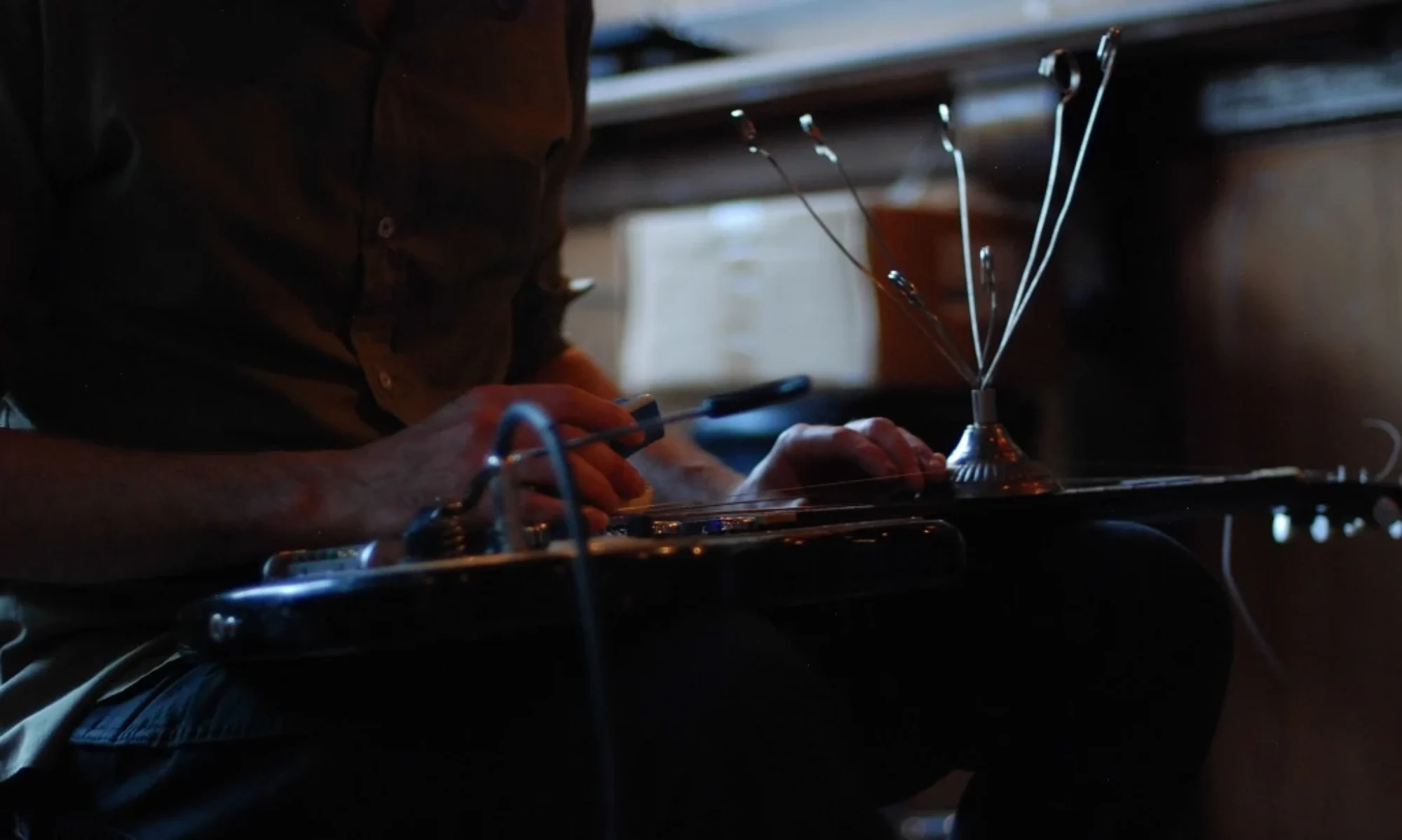
Gong at Water Sines Studios, 14 June 2025

As we look ahead to the future, we are still committed to presenting creative music in the Northwest, but we’re looking for ways to do it that are sustainable and within our means. After much discussion, we’ve decided on a strategy we hope will work.

Rather than presenting a single big event each year, we plan to stage regular events at venues that have proven friendly to the music we promote. There are a number of consequences that go along with this decision.

First, we won’t be able to invite national and international artists as we have in the past. What we can do is help out touring bands who want to play in the area and just need a local boost and connection.

Second, we will be working with venues other than theaters, which have expenses out of our reach. Luckily, there are a number of locations in the area that have proven amenable to our non-mainstream sensibilities.
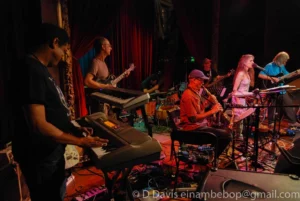
Thinking Plague, Seaprog 2013, Columbia City Theater Main Stage, 30 June, 2013. L-R: Kimara Sajn, Bill Pohl, Robin Chestnut, Mark Harris, Dave Willey, Elaine Di Falco, Mike Johnson

Third, we are no longer able to maintain non-profit status. We are eternally grateful to our partners at Shunpike for all they’ve done over the years. They gave us the boost to accomplish some amazing things that we could never have dreamed of without them. However, booking a series of small events at various clubs that have their own ticketing systems just doesn’t fit in with a non-profit model.

We are open to a future in which things change to the point where festivals are once more a practical reality, but we must live within our means, and we hope our long-time attendees will be willing to come along with us in this next phase of our existence.

We hope to be making announcements soon for our first events, so stay tuned.

Cascadence 2025 changes venue

We have important information to share about the upcoming Cascadence event. Ticket sales have been decidedly lackluster, and as we’ve noted in a previous post, putting on a festival like this is expensive. We have come to the conclusion that the Rainier Arts Center, while it is a great room and we hope to work with them in the future, is just too big for our means. Luckily, we have managed to secure an alternative space that suits both our needs and our budget.

Cascadence 2025 will be happening at Water Sines Studios on Alaskan Way South. This beautiful venue has a cozy feeling, with colorful rugs and art on the walls.

With the reduced budget comes a reduced lineup. Gong and the Kathy Moore Super Power remain on the bill, but Rachel Flowers and Khu.eex’ will no longer be performing. If you already purchased tickets, you should be getting an email with information about your options.

Everyone hates to talk about money

In some of the earliest discussions among the founders of Seaprog, an idea that came up often was the fact that the workings of concerts, and music festivals, are often a mystery to people outside the small circle of event organizers. We decided that transparency was a worthy aspiration. Once things got going, transparency fell somewhat by the wayside, not from any desire to keep secrets, just from neglect in the face of everything else we were doing.

When you start talking about money, you start touching on issues of privacy, so there are limits to what kind of openness is appropriate.

The bottom line is that putting on a music festival, even a modest-sized one, is expensive. One of our largest expenses is for the venue. It costs us more than $3000 to have the venue for a single day. Our total for all of the artists comes in around $10,000. Taking that total and dividing by the capacity of the Rainier Arts Center, which is about 250, we see that $53 per ticket would break even. If we sell every single ticket.

But there are other expenses to consider as well. We have to spend money on promotion and advertising — we have certainly learned that our real-world and social media connections are insufficient to get the word out, so we have to spend time and money to get the word out, printing posters and buying ads. And we have to pay graphic artists to create those materials, since it wouldn’t be fair or ethical to ask them to donate their services. If we want to have t-shirts available, we have to pay to have them printed. Admittedly, we’ll make that back if we sell them, but we don’t have that money at the time we get them made, and they might not all sell (we’ve still got some shirts from previous years left over). We have to provide refreshments for the artists on the day of the show, and some of them are from out of town and need hotel rooms.

That does not cover all of our expenses, but it’s the majority, and enough to get an idea of how this works. We’ve set our discount price at $65 and full price at $80 because — allowing for reasonably good ticket sales — that should get us to the break-even point with a little cushion for contingencies. If there’s a bit left, we’ve got a seed for next year’s activities, where we start over and do it all again.

As a non-profit venture, we are not doing this to make money, and in fact all of us on the Central Committee have at one time or another contributed in one way or another to help things along. In our early days, before we solidified our non-profit status with Shunpike, things were especially shaky. And speaking of Shunpike, they do take a cut of all the funds that come in to cover things like taxes, non-profit registration, legal compliance, accounting, and banking, but those are things we couldn’t realistically do ourselves.

Experiencing music in a setting like the Rainier Arts Center is a very different experience from catching a show in a bar. You get cushioned seats, good acoustics, and no distractions from people buying drinks or making small talk. Given the prices for concert tickets lately (how about $150 to see the Beat tour from the upper balcony?), we think Cascadence is a bargain. We also hope you can understand why we ask for donations as well. They’re tax-deductible for the giver and help us take care of business.